FORD F8HT-5225-A2A Diesel Muffler 6.6
fits model: F-700. make: Ford. year: 1988.
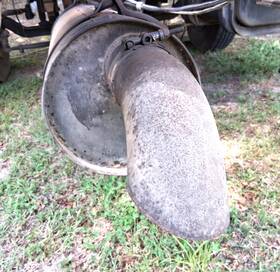
( Manufacturer Part Number: F8HT-5225-A2A ), ( Part Type: Muffler )
Review FORD 6.6 Diesel Muffler Assy fits F-700 1988
The **Ford F-8HT-5225-A2A 1988 F-Series 6.6L Diesel Muffler** is a meticulously engineered aftermarket exhaust component designed specifically for Ford s legendary **6.6L diesel engines**, most notably those found in the **F-700 series** and other heavy-duty F-Series trucks from the late 1980s. This high-performance muffler is crafted to deliver an uncompromising blend of durability, sound refinement, and enhanced exhaust flow, making it an ideal upgrade for enthusiasts seeking both improved performance and a more polished exhaust note. Built to exacting standards, the **F8HT-5225-A2A** features a robust **stainless steel construction**, ensuring resistance to corrosion, extreme temperatures, and the harsh conditions often encountered in industrial, agricultural, or off-road applications. Its precision-engineered design incorporates **internal baffling and sound-dampening technology**, striking a balance between a deep, resonant exhaust tone and reduced road noise, allowing drivers to enjoy a more engaging yet civilized listening experience. The muffler s **flanged connections** are designed for a secure, leak-free fit, utilizing high-quality gaskets and clamps to maintain optimal sealing under vibration and heavy loads. Whether installed as part of a full exhaust system upgrade or as a standalone component to address specific performance or noise concerns, this muffler is engineered to meet the demanding requirements of the **6.6L diesel**, ensuring reliable operation while contributing to a more refined and powerful exhaust signature. For owners of classic or restored F-Series trucks, this muffler not only restores factory-like performance but also enhances the vehicle s aesthetic appeal with its clean, modern finish, making it a standout choice for those who demand both functionality and style.
### **Pros and Cons of Buying a 1988 Ford F-8HT 5225-A2A (F-700) with a 6.6L Diesel Muffler**
#### **Pros**
1. **Durability and Workhorse Reliability** The Ford F-700 series, particularly the 6.6L diesel models, were built for heavy-duty industrial, agricultural, and commercial use. These trucks were designed to last for decades with proper maintenance, making them a cost-effective choice for long-term operations.
2. **Strong Engine Performance** The 6.6L diesel engine (commonly the IDI or turbocharged versions) was known for its torque and efficiency, making it well-suited for towing heavy loads, hauling materials, or operating in rugged conditions. The engine s simplicity also made repairs and maintenance more straightforward compared to modern complex systems.
3. **Proven Resale Value** Classic Ford F-700s, especially well-maintained ones, hold value in niche markets. If you plan to sell or trade it later, a properly restored or preserved example can still fetch a decent price among collectors or industrial buyers.
4. **Availability of Parts** While some components may be harder to find than in newer trucks, the Ford F-700 has a strong aftermarket support system. Many parts, including mufflers, exhaust systems, and engine components, are still produced by specialty manufacturers or can be sourced from salvage yards.
5. **Off-Road and Heavy-Duty Capability** The F-700 was built for tough environments, with features like solid axles, heavy-duty suspensions, and robust frames. This makes it ideal for construction, farming, or off-road use where modern passenger trucks may struggle.
6. **Lower Operating Costs (Compared to Modern Trucks)** Diesel fuel was historically cheaper than gasoline, and the 6.6L engine was fuel-efficient for its class. While modern emissions regulations have increased maintenance costs for older diesels, a well-maintained F-700 can still be economical to run.
7. **Customization Potential** The F-700 platform allows for extensive modifications, including aftermarket exhaust systems (like the muffler you re considering), lift kits, heavy-duty suspensions, and even engine swaps (e.g., turbocharging or larger displacement engines).
8. **Nostalgia and Collectibility** For enthusiasts, the F-700 holds a place in truck history, especially the 1980s models, which were a transitional period between classic and modern Ford trucks. Owning one can be a point of pride for those who appreciate vintage industrial vehicles.
---
#### **Cons**
1. **High Maintenance Requirements** Older diesel engines, especially non-turbocharged or IDI models, require regular maintenance to prevent issues like carbon buildup, injector failures, or turbocharger wear. Modern emissions standards have made aftermarket modifications (like exhaust changes) more complex due to EGR, DPF, or other systems that may not exist in this truck.
2. **Emissions and Legal Compliance** Many modern exhaust systems, including aftermarket mufflers, may not comply with current emissions regulations if the truck is used on public roads. Some states or countries have strict rules on modifications to diesel trucks, which could limit where you can drive it legally.
3. **Rust and Structural Issues** The 1988 model is approaching 40 years old, and rust can be a significant problem, especially in the frame, suspension, and undercarriage. A thorough inspection is critical to avoid hidden repair costs.
4. **Driver Comfort and Modern Safety Features** The F-700 lacks modern safety features like airbags, stability control, or advanced braking systems. The cab may also be less comfortable for long hours compared to contemporary trucks, with less sound insulation and ergonomic design.
5. **Fuel and Part Scarcity** While diesel fuel is still available, some specialty parts (e.g., rare mufflers, specific engine components) may be difficult to find. Prices for these parts can also be higher due to limited supply.
6. **Resale Limitations** While the F-700 has a loyal following, its resale market is niche. Most buyers will be industrial operators, collectors, or enthusiasts, not general consumers. This means you may not recoup as much as you invested unless you re selling to the right audience.
7. **Operational Costs Over Time** Despite initial fuel efficiency, older diesel engines can develop leaks, wear out turbochargers, or require expensive repairs (e.g., fuel injectors, timing belts). The cost of restoring it to full functionality can be prohibitive.
8. **Limited Modern Technology Integration** Connectivity features like GPS, telematics, or advanced diagnostics are absent. If you rely on modern fleet management tools, this truck won t integrate easily.
---
### **Ending Conclusion**
The 1988 Ford F-8HT 5225-A2A (F-700) with a 6.6L diesel engine is a **fantastic choice if you prioritize durability, raw power, and off-road capability** over modern convenience. It excels in industrial, agricultural, or heavy-haul applications where reliability and torque are more important than fuel efficiency or emissions compliance. However, it requires **significant upfront inspection, maintenance planning, and potential modifications** to ensure it s road-legal and operational.
If you re buying this truck **primarily for work** (e.g., towing, construction, or off-road use) and can handle its quirks, it s a **cost-effective powerhouse**. If you re considering it **for personal use or as a daily driver**, the trade-offs in comfort, safety, and modern features may outweigh the benefits.
---
### **Recommendation**
1. **If you re an enthusiast or need a heavy-duty work truck:**- **Buy it** if you ve inspected it thoroughly for rust, engine health, and structural integrity.
- Ensure the muffler you re installing complies with local emissions laws (or plan to use it off-road only).
- Budget for regular maintenance, including fuel system cleaning, turbocharger checks, and suspension repairs.
- Consider restoring it to original or near-original condition if you plan to sell it later.
2. **If you re unsure about long-term commitment or maintenance:**- **Rent or lease a modern heavy-duty truck** instead, which will offer better fuel economy, safety, and lower upkeep.
- If you must have a classic, consider a **lesser-used model** (e.g., a Ford F-100 or F-250 diesel) that s easier to maintain and modify.
3. **For the muffler specifically:**- Ensure it s compatible with the truck s exhaust system and emissions requirements.
- If modifying for performance, research whether it will trigger **smog check failures** or **DPF/EGR issues** in modern trucks (though the F-700 likely lacks these systems).
- Prioritize **high-quality aftermarket brands** (e.g., Flowmaster, Borla, or industrial exhaust manufacturers) to avoid premature failure.
**Final Verdict:** The F-700 is a **brilliant workhorse** for the right owner, but it demands respect and preparation. If you re prepared for its challenges, it s a rewarding purchase. Otherwise, modern alternatives may serve you better.
Details:
1988 Ford F-700 ,6.6 Brazilian Diesel Muffler assembly, # F8HT-5225-A2A, complete with hangers, clamps and extension, all for one money. Please see photos blag.
part #: f8ht5225a2a price
- $135.02
specifications emissyste:
- for models: F-700
- for makes: Ford
- for years: 1988
- mpn: F8ht-5225-a2a
- part type: Muffler
returns emissyste:
- time: 30 Days
- paid by: Seller
- policy: Returns Accepted
general emissyste:
- condition: Used
- Car Truck Parts Accessories > Exhaust Emission Systems > Other Exhaust Emission Parts
offer emissyste:
- started: May 14, 2026
- quantity: 1
- sold: 0
- options: Seller-arranged-local-pickup
- best offers: True
- availability: In Stock
shipping emissyste:
payments emissyste:
- credit card: Mastercard
- cash
- wallet: Google-pay
- check
- other
seller emissyste:
- # reviews: 2178
- city: Siler City, North Carolina
- rating: 98.8%
Ford F8HT-5225-A2A Is Similar To:
- -w520103-s403 Ford Mercury Genuine Front Muffler Nut (32.4% similar) Orders: orders cannot be canceled once shipped. Keep all packaging and paperwork wrongly boxed or incorrect part: to discuss your case. If the item is packaged separately ie: in a bag, etc. Most orders ship with in 48 hours. Part must have been installed by a ford factory trained service technician...(May 20th, 2018)
- 1875109c94 Ford Diesel Used Fuel Cooler (34.8% similar) Furthermore, the list may not be complete either. Specializing in automotive cores, hard parts, and used inspected electronics not seeing what you're looking for or have any questions...(December 9th, 2018)
- 1l5z-9g291-ca Ford Genuine Tube Assembly (28% similar) Shipping carrier substitutions may be made at our determination in an attempt to reduce cost the customer. Parts must be resalable and in the original packaging. Electrical parts are not returnable...(January 5th, 2018)
- 4l2z-9c915-bb Ford Genuine Valve Assembly Oem (26.5% similar) Big stuff goes fed ex or ups. The discount will depend on weight, destination, and items' ability to pack together. Hot rod rat Gasser race car stock mustang Shelby convertible coupe fastback gm Pontiac Oldsmobile Buick mercury Lincoln truck vintage Studebaker deist wildcat Edsel Camry fire bird ...(June 7th, 2018)
- 8c3z6a664b Ford Oem Super Duty Emission Tube Assembly (28.3% similar) Worth of inventory for ford, motor craft, engraved, and ford performance products. We house over 4,000,000...(May 3rd, 2018)
- 8l8z-9d667-b Ford Emission Vapor Tube Hose Pipe Line Assembly Mercury Mariner (24.6% similar) If you are outside the 48 contiguous states or need faster delivery service, please before purchasing item. Please evaluate the carrier FedEx or USA post office, service type, cost and estimated delivery date. Oem resale sells genuine original equipment manufacturer oem automotive parts...(September 13th, 2018)
- 904-851 Dorman Ford Powerstroke Def Diesel Exhaust Fluid Heated Line Assembly (35.4% similar) Doorman products carry a lifetime warranty. Warranty is only valid to original purchaser. Doorman def injector feed lines are quality-engineered for a longer service life and trouble-free performance. 7l ford power stroke diesel exhaust emission fluid heated line assembly doorman oem BC3Z-5J249-T ...(July 30th, 2018)
- Al8z-7g391-c Ford Genuine Solenoid Assembly (29.2% similar) Electrical parts are not returnable. Shipping carrier substitutions may be made at our determination in an attempt to reduce cost the customer. Parts must be resalable and in the original packaging. 5 million in genuine ford and motor craft parts...(April 18th, 2017)
- Bb5z9g271b Ford Oem Edge Emission Assembly (27.4% similar) This parts position is rear. We house over 4,0 worth of inventory for ford, motor craft, engraved, and ford performance products. This part fits vehicles made in the following years 2012 , 2013 , 2014 , 2015...(September 22nd, 2018)
- Bc3z-9d878-a Ford Oem Speed Sensor Wire Assembly (27.7% similar) Location: 2F. For sale: genuine ford oem speed sensor wire assembly BC3Z-9D878-A F250 F350 F450 F550, new. Shipping is free in the us...(July 17th, 2018)
- Bk2z-9358-a Ford Genuine Valve Assembly Fuel Vapour (25% similar) You can trust stone ham parts to be your source for all ford needs. Parts must be resalable and in the original packaging. Shipping carrier substitutions may be made at our determination in an attempt to reduce cost the customer. Electrical parts are not returnable. Our ford parts team is here to ...(June 4th, 2018)