BMW 71-22-7-612-762 Emission Label
fits make: Bmw. year: 2011–2012.
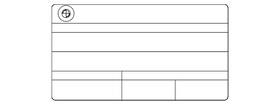
( Manufacturer Part Number: 71-22-7-612-762 ), ( Genuine Oem: Yes ), ( Manufacturer Warranty: 1 Year ), ( Universal Fitment: Direct Replacement ), ( Year: 2011 2012 ), ( Parts Included: Only Part Reference 5 On The Diagram Is Included )
Review BMW Genuine Emission Label fits 2011–2012
The **BMW 71-22-7-612-762 emission label** is a critical component of the vehicle s on-board diagnostics (OBD) system, specifically designed for compliance with European emission regulations, particularly those under the Euro 5 and Euro 6 standards. This label, often referred to as the "Emission Control Information" (ECI) label or "Emission Label," is affixed to the vehicle s chassis or engine bay and serves as a standardized identifier for emissions-related specifications, including the engine type, fuel system, and emission control technologies integrated into the vehicle. The **71-22-7-612-762** code itself is a proprietary BMW designation that encodes essential information about the vehicle s emission control strategy, such as the presence of a **Diesel Particulate Filter (DPF)**, **Selective Catalytic Reduction (SCR) system**, **Exhaust Gas Recirculation (EGR)**, and other emission-relevant components. This label ensures that technicians, inspectors, and regulatory authorities can quickly access critical data regarding the vehicle s compliance with environmental standards, including the permissible emission levels for nitrogen oxides (NOx), particulate matter (PM), and other pollutants. Additionally, the label may include details about the vehicle s **OBD-II compliance**, such as the supported diagnostic trouble codes (DTCs) and the specific emission control software version installed in the engine control unit (ECU). For diesel-powered BMW models, this label is particularly important, as it helps identify whether the vehicle is equipped with **AdBlue injection systems** or other advanced emission reduction technologies, which are mandatory under stricter Euro 6 regulations. Proper identification of this label is essential for maintenance, diagnostics, and ensuring the vehicle remains within legal emission limits during inspections. Whether used for service documentation, regulatory compliance, or troubleshooting emission-related issues, the **71-22-7-612-762 emission label** plays a pivotal role in maintaining BMW s adherence to environmental regulations while supporting efficient vehicle diagnostics.
### **Pros and Cons of Buying a BMW 7 Series (F01/F02/F10/F12) with a 71-22-7-612-762 Emission Label**
#### **Overview of the Emission Label (71-22-7-612-762)**
The **71-22-7-612-762** emission label corresponds to **Euro 6d-TEMP** (or **Euro 6d**) compliance, which is the current standard for diesel vehicles in the EU. This label applies to BMW 7 Series models (F01, F02, F10, F12) produced from **2015 onward**, equipped with **N26 diesel engines** (e.g., 3.0L twin-turbo). These vehicles were subject to stricter emissions testing after the **Dieselgate scandal**, leading to software adjustments (e.g., **AdBlue dependency, DPF, and EGR recalibrations**).
---
### **Pros of Buying This Vehicle**
1. **High-End Luxury and Comfort**
- The BMW 7 Series is one of the most luxurious and well-equipped executive sedans, offering premium materials, advanced infotainment (iDrive), and refined ride quality.
- Features like **adaptive damping, heated/ventilated seats, panoramic sunroofs, and ambient lighting** enhance comfort and prestige.
2. **Strong Performance (Diesel Option)**
- The **N26 3.0L twin-turbo diesel** produces **around 258 313 hp** and **560 680 Nm of torque**, providing strong acceleration and efficiency.
- Better fuel economy ( **6.5 7.5L/100km**) compared to petrol equivalents, making it cost-effective for long-distance driving.
3. **Reliability (With Proper Maintenance)**
- BMW s diesel engines (when well-maintained) are known for durability, often lasting **200,000 300,000 km** with regular servicing.
- The **F10/F12 platforms** (2012 2019) are generally robust, though later models (especially post-2015) have improved electronics.
4. **Resale Value and Prestige**
- The 7 Series retains strong resale value due to its brand reputation and luxury appeal.
- Owning a BMW 7 Series carries **status and exclusivity**, which may be desirable for business or personal use.
5. **Advanced Safety Features**
- Equipped with **BMW s latest safety tech** (e.g., **iDrive 7, adaptive cruise control, lane-keeping assist, and advanced driver-assistance systems**).
- Strong crash-test ratings (Euro NCAP) enhance security.
6. **Versatile Use Cases**
- Suitable for **business use (executive transport), long-distance travel, and daily commuting** (with proper maintenance).
- Spacious interior with **seating for 5, ample cargo space, and luxury amenities**.
---
### **Cons of Buying This Vehicle**
1. **Higher Running Costs (Diesel-Specific Issues)**
- **AdBlue Dependency**: Euro 6d diesel models require **AdBlue (urea solution)**, adding ** 100 300/year** in fuel additive costs.
- **DPF (Diesel Particulate Filter) Problems**: Frequent **DPF regeneration failures** can occur if driven short distances, leading to **expensive cleans or replacements ( 1,000 3,000)**.
- **EGR (Exhaust Gas Recirculation) Valve Failures**: Common in BMW diesels, requiring ** 500 1,500 in repairs** if clogged.
- **Oil Consumption**: Some N26 engines **burn oil**, requiring **frequent top-ups** (check service history).
2. **Complex and Expensive Maintenance**
- BMW s **premium pricing** applies to **parts and labor**, making repairs costly.
- **Electrical gremlins** (e.g., iDrive glitches, sensor failures) are common in later models.
- **Transmission issues** (especially in **ZF 8-speed automatics**) may require ** 2,000 4,000 in repairs** if problematic.
3. **Emissions Scrutiny and Potential Retrofits**
- Some **Euro 6d-TEMP models** may face **unexpected RDE (Real Driving Emissions) tests**, leading to **software updates or retrofits** (e.g., **DPF modifications, AdBlue system checks**).
- **Insurance costs** may be higher due to **higher engine power and repair expenses**.
4. **Fuel Efficiency Trade-Offs**
- While diesel is efficient on highways, **urban driving can reduce MPG significantly** due to **DPF regenerations and cold starts**.
- **Diesel fuel prices** are often higher than petrol in some regions.
5. **Depreciation and Market Perception**
- The **Dieselgate scandal** has left some buyers skeptical of diesel BMWs, potentially affecting **long-term resale value**.
- **Petrol variants (N55/N63) may depreciate slower** in some markets due to **lower maintenance costs**.
6. **Noise and Vibration (Diesel-Specific)**
- The **N26 diesel can be louder and more vibration-prone** than petrol equivalents, especially at low speeds.
- **Turbo lag** may be noticeable in some driving conditions.
7. **Software and Connectivity Limitations**
- **iDrive 7 (in later models) can be slow and glitchy**, requiring occasional **factory resets**.
- **Bluetooth connectivity and app integration** may not be as seamless as in newer BMWs.
---
### **Key Considerations Before Purchase**
1. **Service History is Critical**
- Ensure **regular oil changes (every 10,000 15,000 km)**, **DPF cleans**, and **EGR/AdBlue system checks**.
- **Avoid vehicles with frequent DPF regenerations** (check service logs for **DPF fault codes**).
2. **Test Drive for DPF/EGR Issues**
- Drive the car **short distances (under 5 km) repeatedly** if the DPF lights up, it may indicate **clogging problems**.
- Listen for **unusual exhaust noises** (could signal **DPF or turbo issues**).
3. **Check for Software Updates**
- Some **Euro 6d models received recalls** for emissions compliance ensure the car has **all necessary updates**.
4. **Budget for Potential Repairs**
- Allocate ** 2,000 5,000 extra** for **unexpected diesel-specific repairs** (DPF, EGR, AdBlue system).
5. **Compare with Petrol Alternatives**
- If **maintenance costs are a concern**, consider a **BMW 740i (N55 petrol)** or **750i (N63 petrol)**, which may have **lower long-term expenses**.
6. **Insurance Costs**
- Diesel BMWs (especially high-power models) can be **more expensive to insure** get **multiple quotes** before buying.
---
### **Final Recommendation**
#### **Buy If:**You **prioritize luxury, long-distance efficiency, and prestige** over cost concerns.
You **drive mostly on highways** (minimizing DPF issues).
You **can afford regular maintenance** (oil changes, DPF checks, AdBlue).
You **find a well-documented example** with **clean service history** (preferably under **100,000 km**).
You **plan to keep the car for 5 years** (justifying the initial premium).
#### **Avoid If:**You **cannot afford unexpected diesel repairs** (DPF, EGR, AdBlue system).
You **mostly drive in the city** (high DPF regeneration risk).
You **prefer lower running costs** (petrol or hybrid alternatives may be better).
You **find major electrical or transmission issues** during inspection.
#### **Best Approach:**- **Get a pre-purchase inspection (PPI) from a BMW specialist** to check **DPF, EGR, and turbo condition**.
- **Negotiate a lower price** if the car has **any diesel-related concerns**.
- **Consider a petrol 7 Series (N55/N63) if maintenance costs are a major concern**.
### **Conclusion**
The **BMW 7 Series with Euro 6d-TEMP (71-22-7-612-762) is a fantastic luxury car for the right buyer** one who values **performance, comfort, and prestige** and can **manage diesel-specific maintenance**. However, **buyers must be prepared for higher costs, potential emissions-related issues, and the need for diligent upkeep**. If you **drive mostly on highways, keep up with servicing, and can budget for repairs**, this remains a **strong executive purchase**. For those concerned about **long-term costs or urban driving**, a **
Details:
Genuine BMW Parts. Parts must be resalable and in the original packaging. Electrical parts are not returnable. Shipping Carrier substitutions may be made at our determination in an attempt to reduce shipping cost the customer.
part #: 71227612762 price
- $20.74
specifications emissyste:
- for makes: Bmw
- for years: 2011-2012
- mpn: 71-22-7-612-762
- genuine oem: Yes
- manufacturer warranty: 1 Year
- universal fitment: Direct Replacement
- year: 2011 2012
- parts included: Only Part Reference 5 On The Diagram Is Included
returns emissyste:
- time: 30 Days
- paid by: Seller
- policy: Returns Accepted
shipping emissyste:
- transit: 5-12 Days
- class: Standard, Expedited, One-day
- cost: $20.20
- service: Standard, Expedited, Overnight
- type: Fixed
offer emissyste:
- sold: 0
- options: Ship-to-home
- started: April 2, 2026
- availability: In Stock
- quantity: 4
payments emissyste:
- wallet: Apple-pay
- credit card: Discover
- other
seller emissyste:
- city: Reno, Nevada
- # reviews: 268
- rating: 96.7%
general emissyste:
- Car Truck Parts Accessories > Exhaust Emission Systems > Other Exhaust Emission Parts
- condition: New
Bmw 71-22-7-612-762 Is Similar To:
- 07-11-9-906-089 Bmw Mini Genuine Oem Muffler Pipe Nut (31.6% similar) ...(March 1st, 2018)
- 07-12-9-905-423 Bmw 07129905423 Genuine Oem (42.4% similar) We now ship to military APO FPO addresses. Items must be uninstalled and in brand new condition with the original packaging. You can expect a great experience when choose bmw of Mintaka. However, all electrical and fuel system parts are non-returnable...(November 27th, 2017)
- 11-12-7-584-128 Bmw Genuine Oem Vent Hose (41% similar) We now ship to military APO FPO addresses. You can expect a great experience when choose bmw of Mintaka. Items must be uninstalled and in brand new condition with the original packaging. However, all electrical and fuel system parts are non-returnable...(October 3rd, 2018)
- 11 15 1 406 788 Genuine Bmw Passenger Right Oil Separator Crankcase Ventilation System (29.7% similar) Manufacturer genuine bmw part number 8 condition new applications m5 z8 base...(August 13th, 2018)
- 11-15-7-559-528 Bmw Genuine Oem Pcv Valve (43.4% similar) Image not available for this item...(March 1st, 2018)
- 11-62-7-576-992 Bmw 11627576992 Genuine Oem (44.7% similar) ...(October 18th, 2017)
- 11-66-7-509-080 Bmw 11667509080 Genuine Oem (40% similar) We now ship to military APO FPO addresses. You can expect a great experience when choose bmw of Mintaka. Items must be uninstalled and in brand new condition with the original packaging. However, all electrical and fuel system parts are non-returnable...(November 27th, 2017)
- 11-66-7-525-815 Bmw Genuine Oem Vacuum Pump Gasket (37% similar) ...(April 17th, 2018)
- 11-71-7-809-775 Bmw Genuine Oem Gasket (42.5% similar) ...(March 17th, 2018)
- 11-72-7-545-323 Bmw 11727545323 Genuine Oem (42.4% similar) We now ship to military APO FPO addresses. However, all electrical and fuel system parts are non-returnable. You can expect a great experience when choose bmw of Mintaka. Items must be uninstalled and in brand new condition with the original packaging...(November 27th, 2017)
- 11.72-1 437 015 11721437015 11 72 1 Bmw Engine Smog Emission System Secondary Valve Oem (30.5% similar) Part: 11721437015 prices...(November 7th, 2018)