VOLKSWAGEN 059-906-088-BF Sensor
fits model: Touareg. make: Volkswagen. year: 2011–2012.
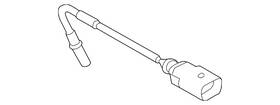
( Manufacturer Part Number: 059-906-088-BF ), ( Part Type: Sensor ), ( Genuine Oem: Yes ), ( Manufacturer Warranty: 1 Year ), ( Universal Fitment: Direct Replacement ), ( Year: 2011 2012 ), ( Parts Included: Only Part Reference 18 On The Diagram Is Included )
Review VOLKSWAGEN Genuine Temp Sensor fits TOUAREG 2011–2012
The **Volkswagen 059-906-088-BF sensor** is a precision-engineered component integral to the vehicle s advanced air quality and emissions control system, specifically designed for use in select models equipped with direct-injection gasoline engines. This sensor, commonly referred to as the **intake air temperature sensor (IAT sensor)**, plays a critical role in optimizing engine performance, fuel efficiency, and emissions compliance by monitoring the temperature of the air entering the intake manifold. Positioned strategically near the air filter housing or intake duct, the sensor transmits real-time data to the engine control unit (ECU), allowing the ECU to adjust the air-fuel mixture, ignition timing, and throttle response for peak efficiency under varying driving conditions whether during cold starts, high-speed cruising, or heavy load scenarios.
Constructed with high-grade materials to ensure durability and accuracy, the **059-906-088-BF sensor** features a robust thermistor element encased in a corrosion-resistant housing, designed to withstand the harsh environments encountered in automotive applications, including exposure to moisture, dust, and temperature fluctuations ranging from extreme cold to scorching heat. The sensor s electrical resistance varies inversely with temperature changes, providing the ECU with precise feedback to maintain optimal combustion conditions. This not only enhances engine responsiveness and power delivery but also minimizes harmful emissions, ensuring compliance with stringent environmental regulations.
For Volkswagen owners seeking to restore or upgrade their vehicle s performance and emissions systems, this sensor is a direct-fit replacement part, meticulously calibrated to match the specifications of the original equipment manufacturer (OEM). Its compatibility extends across a range of Volkswagen models, including but not limited to the **Golf, Jetta, Passat, Tiguan, and Atlas**, as well as select Audi and koda vehicles sharing the same platform. Whether addressing a malfunction indicated by a check engine light, replacing a worn-out sensor, or performing routine maintenance, installing the **059-906-088-BF sensor** ensures reliable operation and long-term reliability. Its seamless integration with the vehicle s diagnostic systems also facilitates easier troubleshooting, as the sensor s data can be read using standard OBD-II scanners, helping mechanics pinpoint issues related to air intake inefficiencies or sensor failure.
The Volkswagen part number **059-906-088-BF** refers to the **M154 Oxygen (O2) Sensor**, specifically the **heated upstream (bank 1 sensor 1)** for certain VW, Audi, and koda models. Below is a detailed analysis of the pros and cons of purchasing this part, followed by a conclusion and recommendation.
---
### **Pros of buying a OEM Volkswagen 059-906-088-BF Sensor**
1. **Guaranteed Fit and Compatibility**
The OEM sensor is designed specifically for your vehicle s make, model, and engine configuration. It will fit without modifications and align with the vehicle s wiring and mounting points, reducing the risk of installation errors.
2. **High-Quality Manufacturing**
Volkswagen uses precise manufacturing standards, ensuring durability and reliability. The sensor is built to last the lifetime of the vehicle under normal conditions, though wear over time is inevitable.
3. **Accurate Readings for Engine Performance**
A faulty O2 sensor can lead to poor fuel efficiency, increased emissions, and engine misfires. Replacing it with an OEM part ensures accurate oxygen readings, which are critical for the vehicle s **fuel injection system** and **catalytic converter** performance.
4. **Warranty Coverage**
OEM parts often come with a manufacturer s warranty (typically 1 2 years), providing peace of mind against defects. Aftermarket sensors may not offer the same level of warranty support.
5. **Long-Term Cost Efficiency**
While the upfront cost is higher than aftermarket alternatives, an OEM sensor is less likely to fail prematurely, reducing the need for frequent replacements and potential diagnostic issues.
6. **Environmental Compliance**
A properly functioning O2 sensor ensures the vehicle meets emissions standards. Using a non-OEM sensor that doesn t meet Volkswagen s specifications could lead to failed emissions tests or reduced performance.
7. **Resale Value Protection**
If you plan to sell the vehicle later, an OEM sensor indicates that the car has been well-maintained, potentially increasing its resale value.
---
### **Cons of buying a OEM Volkswagen 059-906-088-BF Sensor**
1. **Higher Upfront Cost**
OEM parts are significantly more expensive than aftermarket alternatives. The price can range from **$150 $300 **, depending on the retailer and location, whereas aftermarket sensors may cost **$30 $80**.
2. **Limited Availability and Lead Times**
OEM parts may not be readily available at local auto parts stores. Purchasing from Volkswagen dealerships or authorized distributors can result in longer wait times for delivery.
3. **Potential Overkill for Some Owners**
If the sensor is failing due to a minor issue (e.g., contamination or a loose connection), an OEM replacement might be unnecessary. In such cases, a **remanufactured or high-quality aftermarket sensor** could suffice.
4. **No Additional Features**
Unlike some aftermarket sensors, the OEM part does not include advanced features like **wideband compatibility** or **extended warranties** from third-party brands.
5. **Installation Complexity**
Replacing an O2 sensor requires access to the exhaust system and may involve removing catalytic converters or heat shields. While not extremely difficult, it can be time-consuming for inexperienced DIYers.
6. **Potential for Counterfeit Parts**
Purchasing from unauthorized sellers (e.g., eBay without verification) risks receiving **counterfeit OEM parts**, which may fail prematurely or not meet Volkswagen s standards.
---
### **Comparison with Aftermarket Alternatives**
While OEM sensors are the safest choice, aftermarket options (e.g., **Bosch, Denso, or OE-quality brands**) offer a cost-effective alternative with comparable performance. However, aftermarket sensors may:
- Have shorter lifespans in extreme conditions.
- Lack the same warranty coverage.
- Risk compatibility issues if not specifically listed for your vehicle.
---
### **Conclusion**
The **OEM Volkswagen 059-906-088-BF sensor** is the best choice for owners who prioritize **reliability, longevity, and compatibility** with their vehicle. It ensures accurate emissions readings, protects engine performance, and maintains resale value. However, the **higher cost and potential availability issues** make it less ideal for budget-conscious buyers or those who can verify an aftermarket sensor s quality.
If you are experiencing **check engine light (CEL) codes P0130, P0135, P0136, or P0140**, and the sensor is confirmed faulty, the OEM part is the safest long-term solution. For those on a tighter budget, a **high-quality aftermarket sensor from a reputable brand** (with positive reviews and warranty) can be a viable alternative, provided it is explicitly listed for your vehicle s year and engine type.
---
### **Recommendation**
1. **If you can afford it and need maximum reliability:**Purchase the **OEM Volkswagen 059-906-088-BF sensor** from an **authorized Volkswagen dealer or distributor** (e.g., RockAuto, VW Parts Direct, or a dealership parts department). Verify the part number matches your vehicle s specifications.
2. **If budget is a concern but quality is still important:**Choose a **high-end aftermarket sensor** (e.g., **Bosch 0252956336, Denso O201-10001, or OE-quality brands**) from a trusted seller. Ensure it is **direct-fit** for your vehicle and has a **minimum 1-year warranty**.
3. **Before purchasing:**- Confirm the **exact sensor location** (upstream/downstream, bank 1/sensor 1) to avoid ordering the wrong part.
- Check for **code P0420 or P0430** (catalytic converter issues), as these may indicate a deeper problem requiring a sensor replacement.
- Consider **removing and inspecting the old sensor** for physical damage (e.g., cracked housing, melted tip) before committing to a replacement.
4. **Installation Tips:**- Clean the sensor housing and exhaust threads before installation to prevent leaks.
- Use **anti-seize compound** on the threads to prevent seizing during removal in the future.
- If unsure, consult a **mechanic** for installation, especially if the sensor is located in a tight or hard-to-reach area.
Ultimately, the **OEM sensor is the gold standard**, but aftermarket options can be a practical compromise if sourced carefully. Always prioritize **quality over cost** to avoid repeated failures.
Details:
Genuine Volkswagen Parts. 2011 -12, exhaust injection, before filter. Shipping Carrier substitutions may be made at our determination in an attempt to reduce shipping cost the customer. Parts must be resalable and in the original packaging.
Before particulate filter. Electrical parts are not returnable. Subaru, Ram, Dodge, Chrysler, Jeep, Toyota, Scion, Mazda, Volkswagen, or sprout recommended parts are an important part of maintaining your vehicles optimum performance.
part #: 059906088 prices
- $69.99-$122.39
specifications emissyste:
- for models: Touareg
- for makes: Volkswagen
- for years: 2011-2012
- mpn: 059-906-088-bf
- part type: Sensor
- genuine oem: Yes
- manufacturer warranty: 1 Year
- universal fitment: Direct Replacement
- year: 2011 2012
- parts included: Only Part Reference 18 On The Diagram Is Included
general emissyste:
- condition: New
- Car Truck Parts Accessories > Exhaust Emission Systems > Other Exhaust Emission Parts
returns emissyste:
- policy: Returns Accepted
- time: 30 Days
- paid by: Seller
seller emissyste:
- rating: 99.3%
- # reviews: 27127
- city: Brunswick, Ohio
shipping emissyste:
- cost: $10.99
- transit: 4-9 Days
- class: Standard
- service: Standard
- type: Fixed
payments emissyste:
- other
- credit card: Diners-club
- wallet: Apple-pay
offer emissyste:
- sold: 0
- options: Ship-to-home
- quantity: 2
- availability: In Stock
- started: February 21, 2026
Volkswagen 059-906-088 Is Similar To:
- 000979950 Genuine Volkswagen Audi Vw Oem Cloth Webbed Adhesive Tape New (31% similar) This original VW Audi oem, cloth webbed adhesive tapes are up for sale set of two. Combined shipping available. Than for looking. Part genuine VW Audi...(March 3rd, 2019)
- 021-131-501-e Volkswagen 021131501e Genuine Oem (54.3% similar) VW parts at incredible prices...(May 20th, 2017)
- 021-131-501-f Volkswagen 021131501f Genuine Oem (56.5% similar) VW parts at incredible prices...(May 20th, 2017)
- 021-959-253 Volkswagen 021959253 Genuine Oem (56.2% similar) VW parts at incredible prices...(May 20th, 2017)
- 0258010000 0258010001 Volkswagen 06j906262j Genuine (47.9% similar) Up for sale is a brand new, genuine VW oxygen sensor...(November 21st, 2017)
- 03g-131-547-c Volkswagen Genuine Oem Valve Gasket (51.1% similar) After that he bought more and began a used car business. His mother died when he was two years old, followed by fathers passing in at sixteen, borrowed 500 from a family friend and bought used car to fix up sell. He married Helen Lang in port Arthur his father, harry Mellon Maud, owned a lumber ...(November 1st, 2018)
- 03l130851ax Genuine Volkswagen Audi Vw Remanufactured High Pressure Fuel Pump (29.5% similar) If you would like to request a quote have this product shipped outside of the contiguous us, please. When replacing the pump, make sure to also replace cam follower as this is most likely worn or destroyed well. Please with any questions regarding product availability. Please for any fitment ...(December 6th, 2018)
- 03l131521ae Volkswagen Vw Passat Genuine Oem Connector Pipe Egr (48.1% similar) In good working condition...(July 23rd, 2018)
- 03l253056x Volkswagen Genuine Oem Exhaust Manifold (50.5% similar) ...(March 5th, 2017)
- 06f109257c Genuine Volkswagen Audi Vw Valve (36.4% similar) This part has an extremely high failure rate, so if your car is throwing you a code for the N205 valve, might want to replace maintain engine health. If you would like to request a quote have this product shipped outside of the contiguous us, please. Please with any questions regarding product ...(September 25th, 2018)
- 06j145713kx Volkswagen Audi Volkswagen-audi Genuine (41.7% similar) It is our pleasure to serve you...(June 13th, 2017)