MERCEDES 000-905-26-05 Temperature Sensor Benz
fits model: Glk250. make: Mercedes. year: 2013–2015.
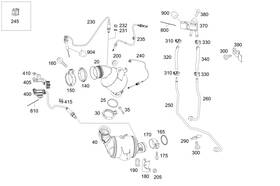
( Manufacturer Part Number: 000-905-26-05 ), ( Part Type: Sensor ), ( Genuine Oem: Yes ), ( Manufacturer Warranty: 1 Year ), ( Universal Fitment: Direct Replacement ), ( Make: Mercedes-benz ), ( Year: 2013 2014 2015 ), ( Parts Included: Only Part Reference 750 On The Diagram Is Included ), ( Replaces Part Number: 9058800 )
Review MERCEDES benz Genuine Temperature Sensor fits GLK250 2013–2015
The **Mercedes-Benz 000-905-26-05 Temperature Sensor** is a precision-engineered component designed to ensure optimal performance and reliability within the cooling system of select Mercedes-Benz vehicles. This high-quality sensor, manufactured to strict OEM specifications, plays a critical role in monitoring the engine coolant temperature, providing real-time data to the vehicle s Engine Control Unit (ECU). Crafted from durable materials, including a robust metal housing and a temperature-sensitive thermistor, this sensor is built to withstand extreme operating conditions, including high temperatures, vibrations, and exposure to coolant fluids. Its seamless integration with the engine bay s wiring harness ensures accurate and consistent readings, allowing the ECU to adjust fuel injection, ignition timing, and cooling system operations for peak efficiency and emissions compliance. Whether installed in a modern luxury sedan or a high-performance SUV, this sensor contributes to the vehicle s overall longevity by preventing overheating and maintaining optimal engine performance. Its compatibility with a wide range of Mercedes-Benz models including those from the W204, W210, and W211 series makes it an essential replacement part for mechanics and DIY enthusiasts seeking genuine quality. With its precise calibration and robust construction, the **000-905-26-05 Temperature Sensor** exemplifies Mercedes-Benz s commitment to engineering excellence, ensuring that every drive remains smooth, efficient, and trouble-free.
### **Pros and Cons of buying a Mercedes-Benz 000-905-26-05 Temperature Sensor**
#### **Pros:**1. **OEM Quality** This part is an original equipment manufacturer (OEM) component, meaning it meets Mercedes-Benz s strict manufacturing standards. It should fit perfectly and perform reliably, reducing the risk of compatibility issues or premature failure.
2. **Reliability and Durability** OEM sensors are designed to last the lifetime of the vehicle under normal conditions. They undergo rigorous testing, ensuring long-term functionality and resistance to environmental factors like heat, moisture, and vibration.
3. **Warranty Coverage** Purchasing directly from an authorized dealer or a reputable supplier often includes a warranty (typically 1 2 years), providing peace of mind in case of defects or early failure.
4. **Accurate Readings** A faulty temperature sensor can lead to incorrect engine temperature readings, causing poor performance, overheating, or unnecessary diagnostic trouble codes (DTCs). Replacing it with an OEM part ensures accurate sensor data, which is critical for engine management and fuel efficiency.
5. **Compatibility** Since it is an original part, there is no risk of cross-threading, improper sizing, or electrical mismatches that can occur with aftermarket or non-genuine parts.
6. **Resale Value Protection** Keeping your vehicle stock with OEM parts can help maintain its resale value, as buyers often prefer vehicles that have not been modified with non-genuine components.
7. **Ease of Installation** OEM parts are designed to integrate seamlessly with the vehicle s systems, reducing the likelihood of installation complications compared to aftermarket alternatives that may require additional adapters or modifications.
---
#### **Cons:**1. **Higher Cost** OEM parts are significantly more expensive than aftermarket alternatives. The 000-905-26-05 temperature sensor will likely cost more than a generic or third-party replacement, increasing the overall repair expense.
2. **Limited Availability** Depending on the region or dealer, OEM parts may not always be in stock, leading to potential delays in receiving the part. This can be inconvenient if you need the sensor urgently to avoid further engine damage.
3. **Potential Overkill for Minor Issues** If the sensor failure is due to a minor issue (e.g., a loose connection or a minor electrical fault), replacing it with an OEM part may be more expensive than necessary. In such cases, diagnosing the root cause first could save money.
4. **Dealer Dependency** Purchasing from an authorized dealer may require visiting a service center, which can be less convenient than buying from an online retailer or auto parts store. Some dealers also mark up prices, adding to the cost.
5. **Environmental and Ethical Concerns** OEM parts often come from manufacturing processes that may have a higher environmental impact compared to some aftermarket brands that prioritize sustainability or recycling.
---
### **Conclusion:**The Mercedes-Benz 000-905-26-05 temperature sensor is a high-quality, reliable OEM component that ensures accurate engine temperature readings and long-term performance. Its primary advantages lie in its compatibility, durability, and warranty support, making it an ideal choice for owners who prioritize quality and want to avoid potential issues with aftermarket parts. However, the higher cost and potential availability challenges are significant drawbacks, especially for budget-conscious buyers or those who may not require OEM-level performance.
For most Mercedes-Benz owners, the investment in an OEM sensor is justified if the goal is to maintain the vehicle s integrity, reliability, and resale value. If cost is a major concern, it may be worth exploring high-quality aftermarket alternatives (e.g., from brands like ACDelco, Bosch, or Mann) that offer similar performance at a lower price, provided they are compatible and come with a good warranty.
---
### **Recommendation:** - **Buy the OEM sensor (000-905-26-05) if:**- You prioritize long-term reliability and want to avoid potential compatibility issues.
- You are replacing the sensor as part of a scheduled maintenance or a warranty-covered repair.
- You plan to keep the vehicle for an extended period and want to preserve its value.
- You have access to an authorized dealer or a trusted supplier that offers competitive pricing.
- **Consider an aftermarket alternative if:**- You are on a tight budget and can verify that the aftermarket sensor is compatible and well-reviewed (e.g., from reputable brands with Mercedes-Benz-specific parts).
- The sensor failure is isolated to a single unit, and you ve confirmed that no other components (e.g., wiring, connectors) are damaged.
- You are comfortable diagnosing and installing the part yourself to save labor costs.
For most cases, especially in newer Mercedes-Benz models, the OEM sensor is the safest and most practical choice. Always cross-reference the part number with your vehicle s specific model and year to ensure compatibility before purchasing.
Details:
Electrical parts are not returnable. Shipping Carrier substitutions may be made at our determination in an attempt to reduce shipping cost the customer. Parts must be resalable and in the original packaging.
part #: 0009052605 prices
- $80.00-$86.99
specifications emissyste:
- for models: Glk250
- for makes: Mercedes
- for years: 2013-2015
- mpn: 000-905-26-05
- part type: Sensor
- genuine oem: Yes
- manufacturer warranty: 1 Year
- universal fitment: Direct Replacement
- make: Mercedes-benz
- year: 2013 2014 2015
- parts included: Only Part Reference 750 On The Diagram Is Included
- replaces part number: 9058800
shipping emissyste:
- transit: 5-10 Days
- cost: $8.99
- type: Fixed
- class: Standard
- service: Standard
offer emissyste:
- sold: 0
- quantity: 1
- availability: In Stock
- options: Ship-to-home
- started: May 2, 2026
payments emissyste:
- other
- credit card: Mastercard
- wallet: Paypal
general emissyste:
- Car Truck Parts Accessories > Exhaust Emission Systems > Other Exhaust Emission Parts
- condition: New
seller emissyste:
- city: San Diego, California
- rating: 99.7%
- # reviews: 2076
returns emissyste:
- paid by: Seller
- policy: Returns Accepted
- time: 30 Days
Mercedes 000-905-26-05 Is Similar To:
- 000 470 88 93 Mercedes-benz (37.9% similar) 00-11 mercedes purge control valve oem...(November 5th, 2017)
- 000 586 41 43 Repair Kit Vacuum Pump Diaphragm Genuine Mercedes Part (36.8% similar) Genuine mercedes part. Priced to sell. Free shipping. Up for sale is a brand new genuine mercedes vacuum pump diaphragm repair kit, still in the packaging...(December 1st, 2018)
- 0004701693 Mercedes Benz Egr Purge Control Valve Regenerator (39.1% similar) Estimated delivery dates are not accurate and guaranteed...(October 29th, 2018)
- 0004708693 Mercedes-benz Mercedes Oem 11-12 (45% similar) This part fits vehicles made in the following years 2010 , 2011...(December 30th, 2017)
- 0004766732 Mercedes-benz Mercedes Oem 00-03 (43.2% similar) This part fits vehicles made in the following years 1995 , 1996 , 1997 , 1998 , 1999 , 20 2001 , 2002 , 2003 , 2004 , 2005 , 2006 , 2007 , 2008 , 2009 , 2010...(September 4th, 2017)
- 0005830107 Genuine Mercedes-benz Mercedes W212 (57.9% similar) Mercedes W212 W906 X166 set of 4 diesel emissions fluids-ad blue 1/2 gallon OSes this listing contains:four x - genuine mercedes-benz MB APPROVAL:352. If you live outside of the USA please research and verify it fits your vehicle before purchasing. Or for a quick response...(December 26th, 2017)
- 0009053403 Mercedes-benz Diesel Aftertreatment System (51.2% similar) ...(April 25th, 2017)
- 0009053603 Mercedes-benz Diesel Aftertreatment System (52.9% similar) ...(April 25th, 2017)
- 0009059703 Mercedes-benz Mercedes Oem Diesel (48.2% similar) This parts position is front...(June 22nd, 2017)
- 001-470-13-93 Mercedes-benz 0014701393 Genuine Oem (49.2% similar) ...(May 5th, 2017)
- 0014700993 Mercedes-benz Mercedes Oem 15-17 (43.2% similar) This part fits vehicles made in the following years 2015 , 2016 , 2017...(January 12th, 2018)